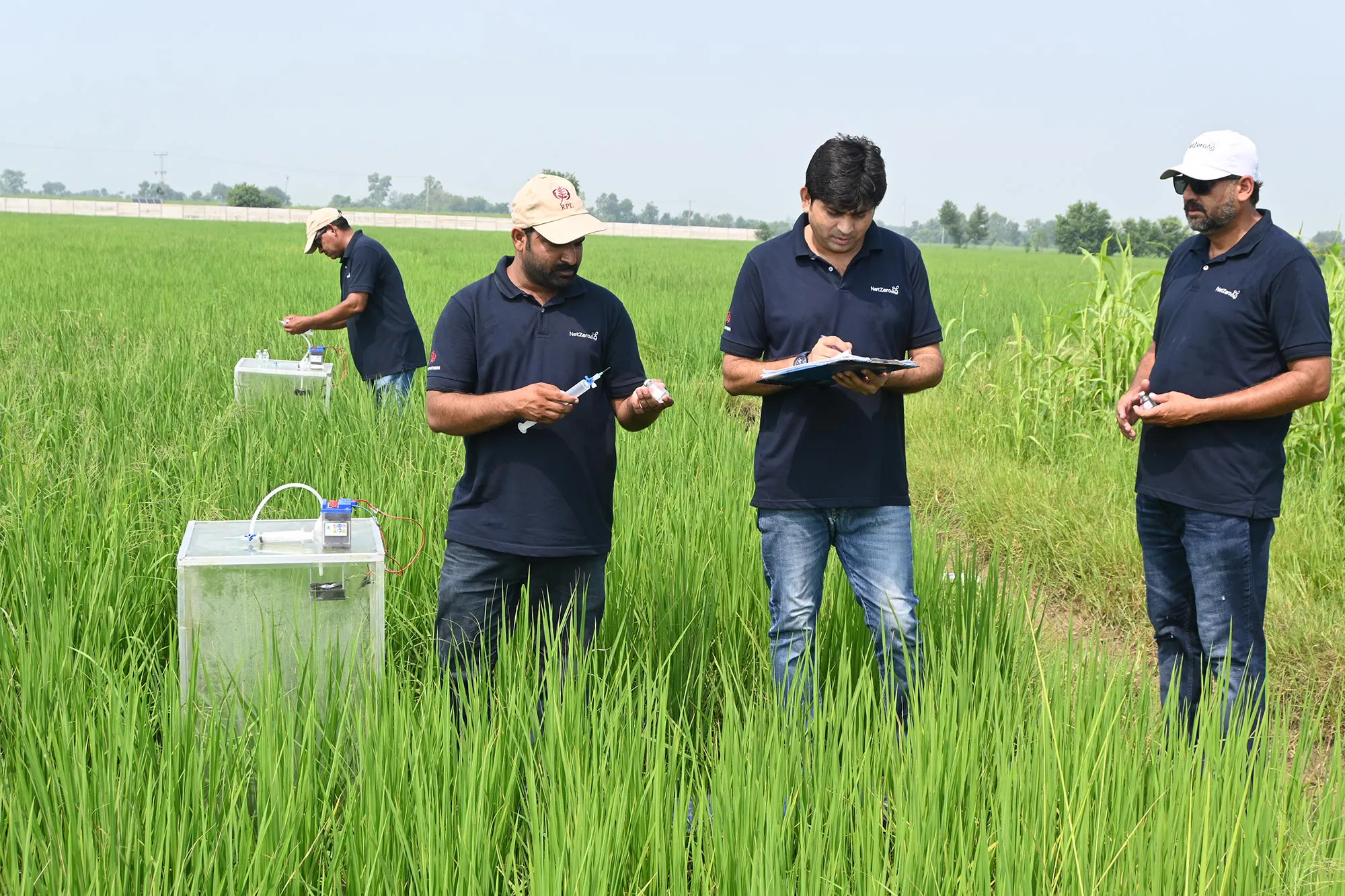
A simple change to how water is managed in paddy fields is reducing emissions, improving livelihoods, and unlocking new economic incentives for smallholder farmers.
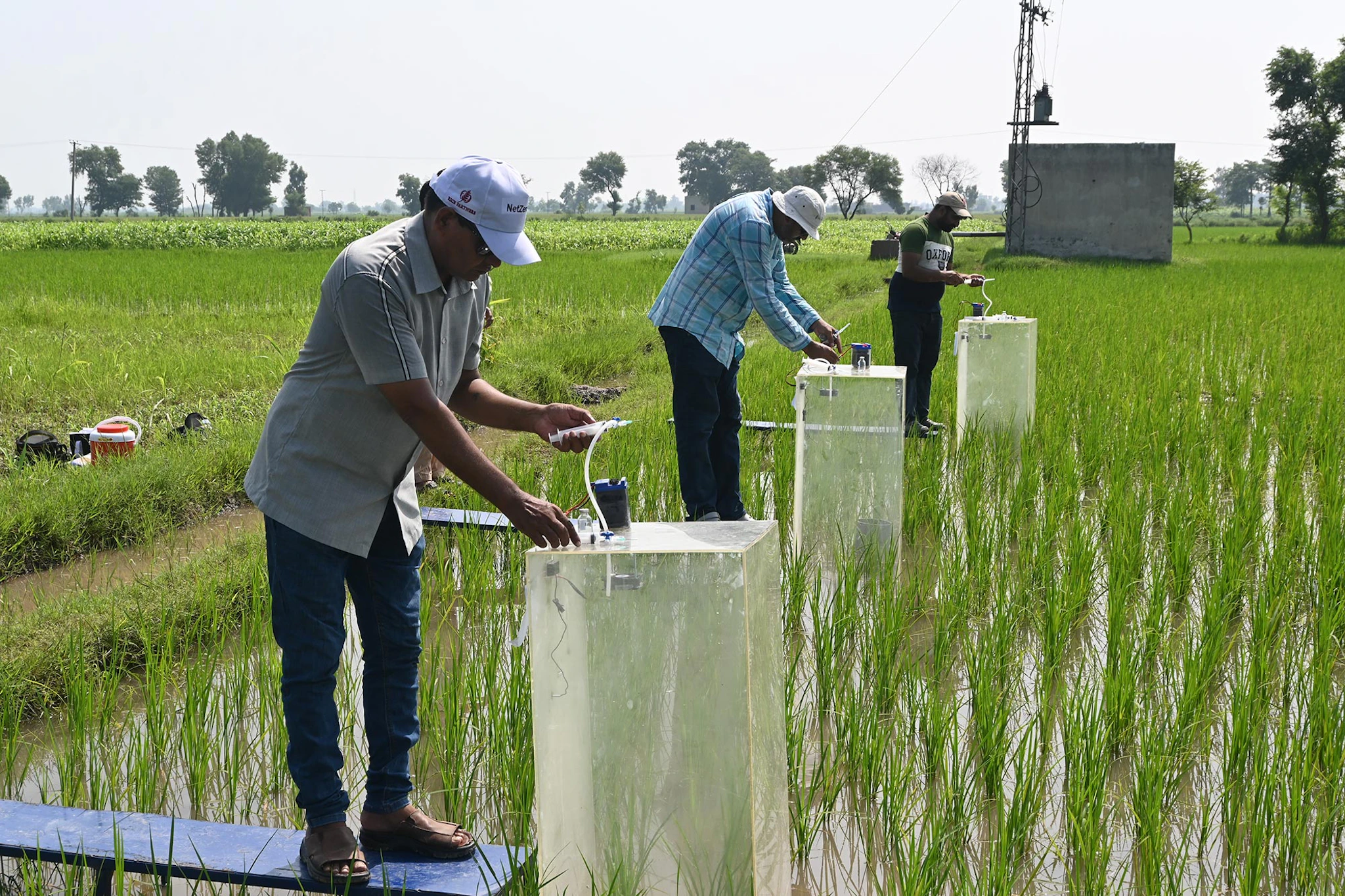
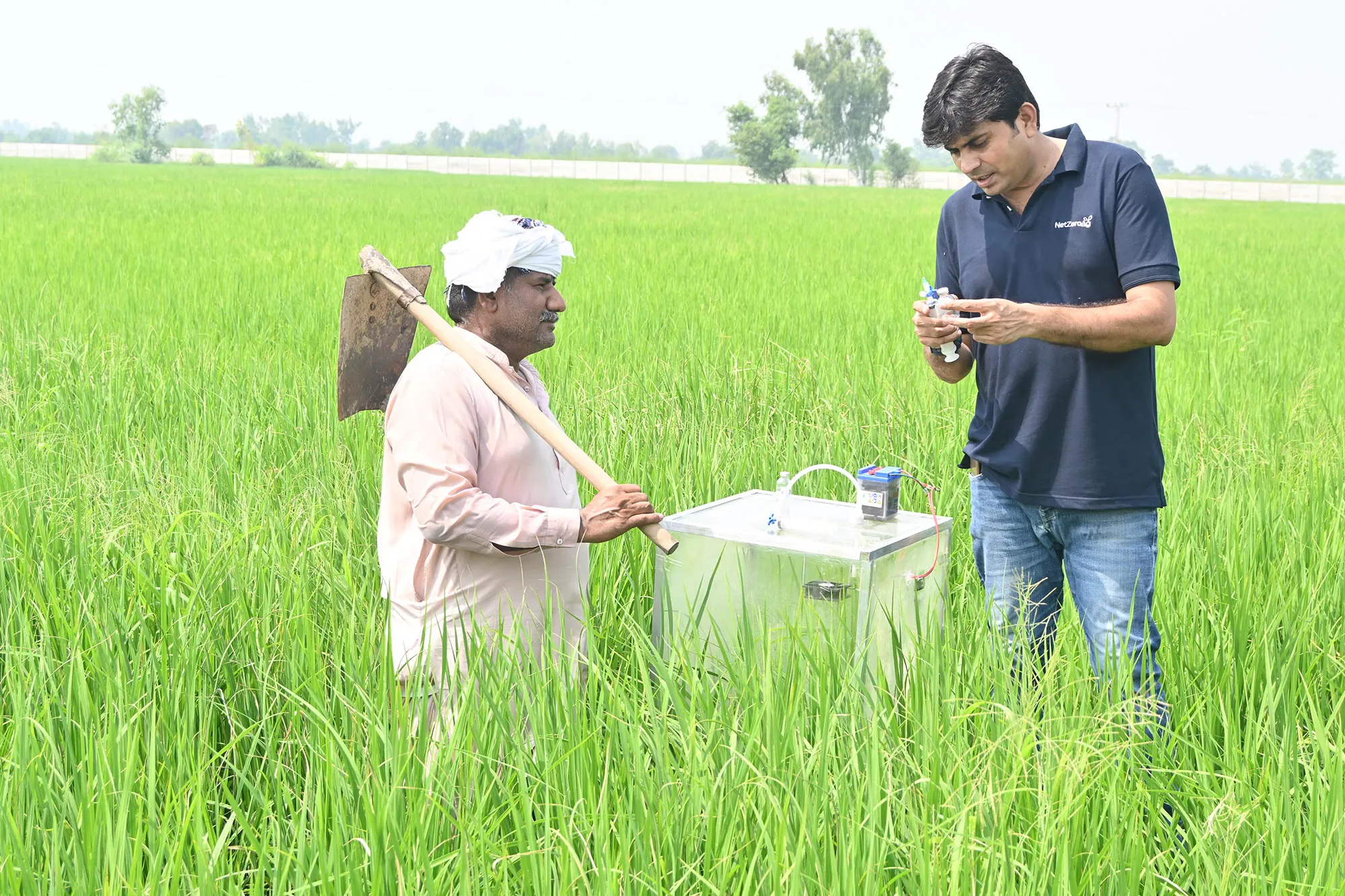
Akram Ali walks to the edge of his rice paddy in Sheikhupura, Punjab, and checks a small bamboo tube sunk into the soil. The water level has dropped below the mark. He opens the irrigation channel. In a few hours, the field will flood again, but only briefly. Then he will let it dry. Then flood. Then dry again.
What looks like a modest change to the rhythm of a working farm is generating something that reaches far beyond Punjab: a measurable, independently verified reduction in greenhouse gas emissions. It is a process known as Alternate Wetting and Drying (AWD), and it reduces water consumption by up to 30% and methane emissions by up to 50%.
"The most valuable resource in our community is water," Akram says. "We want our future generations to have access to fresh water, like we have had. So we must make sure all the farmers in our community learn about this technique, save water, and improve their crop production."
A paradox at the heart of global food production
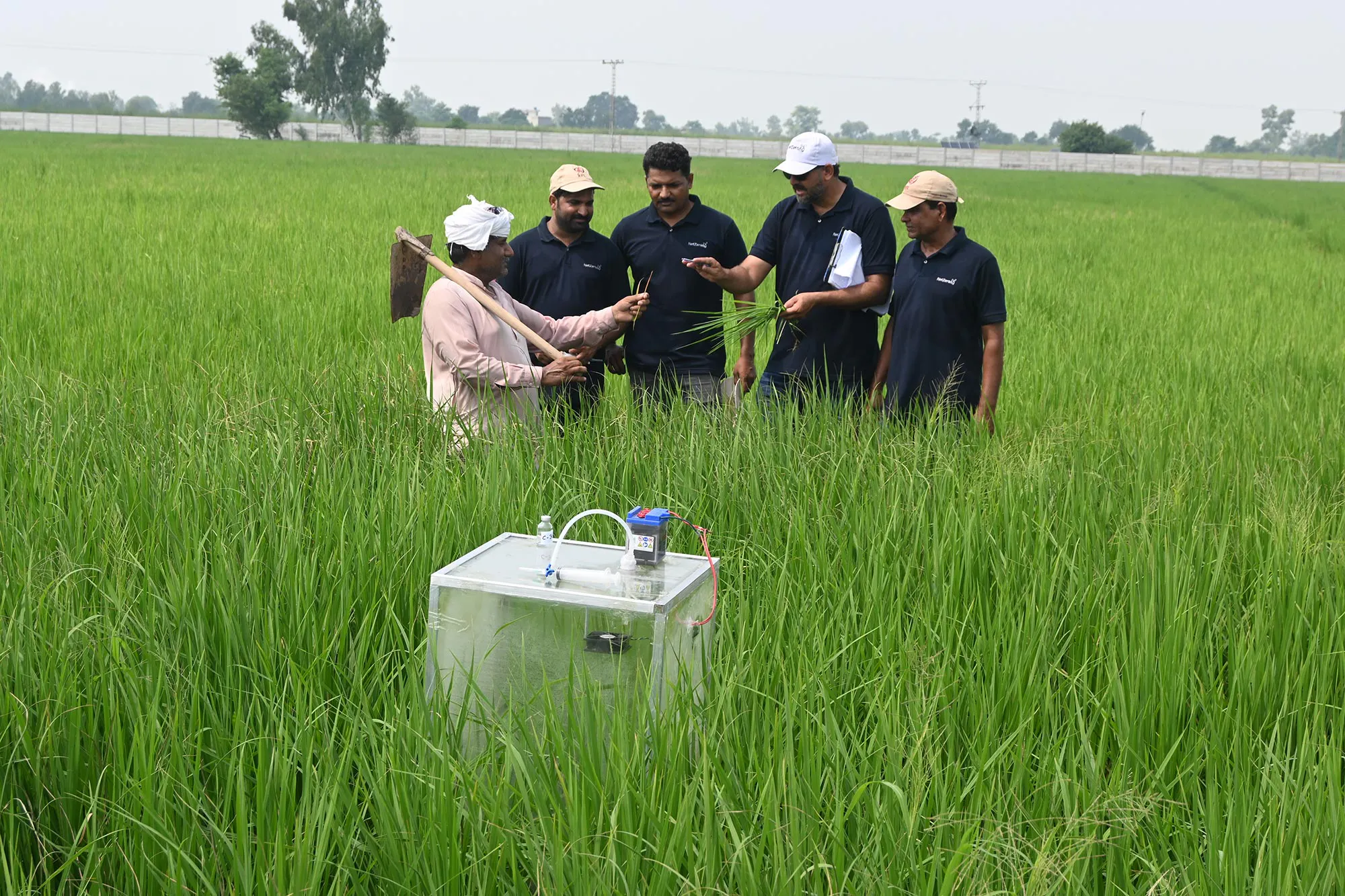
Rice feeds more than four billion people. It is one of the oldest and most essential crops in human civilisation. It is also, in its traditional form, a significant source of methane, a greenhouse gas with a warming potential 28 times greater than carbon dioxide.
Under continuous flooding, oxygen-depleted soils create the ideal conditions for methane-producing bacteria. Globally, rice cultivation accounts for around 14% of agricultural methane emissions, exceeding the total emissions of the aviation sector.
Pakistan’s smallholder rice farmers sit at the centre of this challenge. They are among the most exposed to climate risk, from catastrophic floods to unpredictable monsoons and rising temperatures. At the same time, traditional rice cultivation methods contribute to the emissions driving these impacts. Pakistan’s rice sector generates 7.83 million tonnes of CO₂ equivalent every year, the highest emission intensity per tonne of rice in South Asia.
The farmers are open to change. What has been missing is the right combination of incentives, knowledge and support to make it possible.
A scalable solution, enabled by carbon markets
NetZeroAg, through its local subsidiary Rice Partners Pvt Ltd, is built on a simple principle: smallholder farmers adopt sustainable practices when they deliver clear economic value.
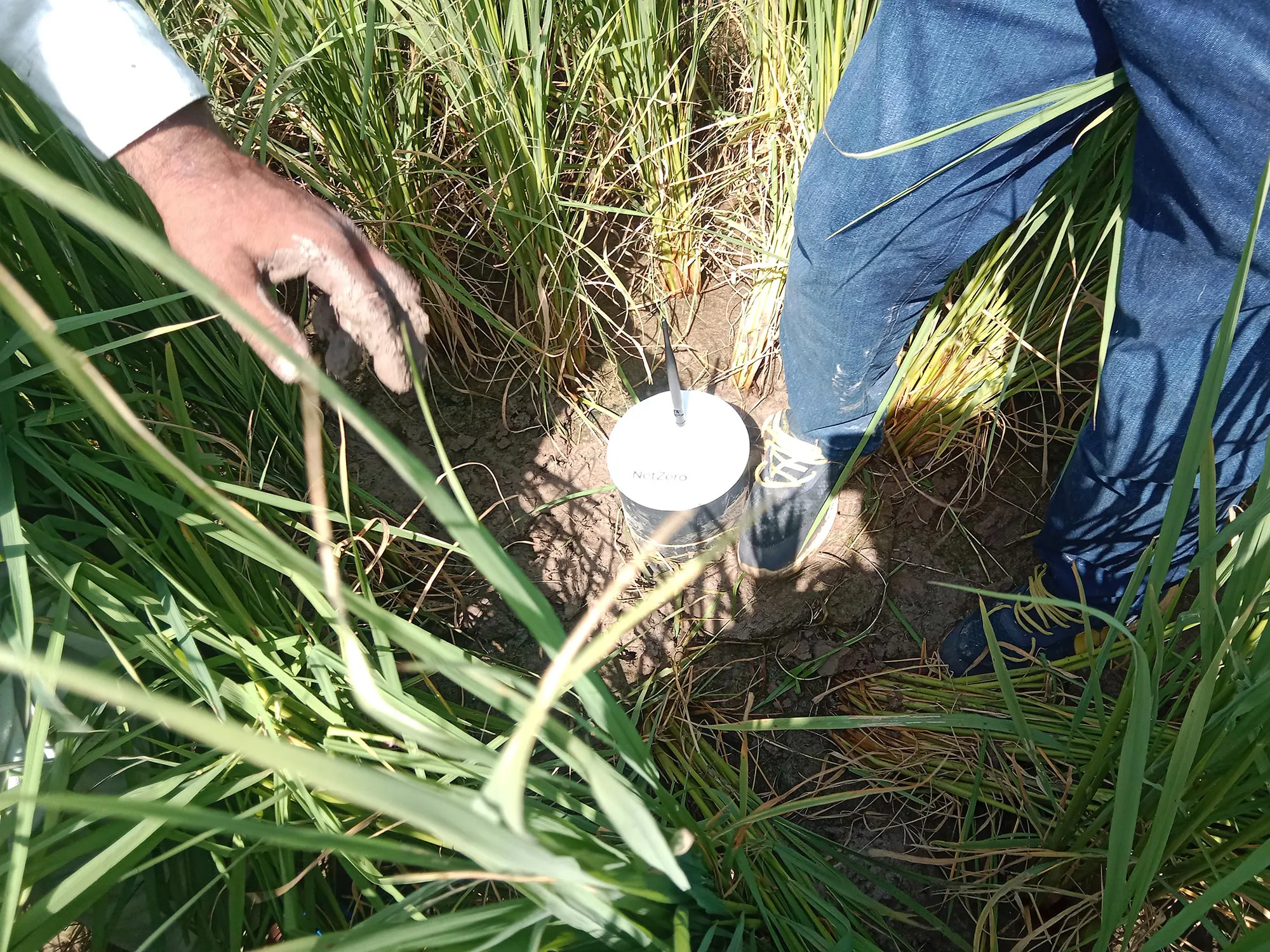
At the core of the project is AWD. Instead of keeping paddies permanently flooded, farmers periodically allow water levels to drop before re-irrigating. This approach maintains and can improve yields while disrupting methane formation and significantly reducing emissions and water use.
NetZeroAg provides participating farmers with hands-on training, field advisory visits, voice support, and a practical crop management guidebook. Through Gold Standard-certified carbon credits, the project generates a direct financial return for every tonne of emissions avoided, creating a new, performance-based income stream for farmers.

Project at a glance
Location
Sheikhupura, Gujranwala, Sialkot and Nankana Sahib, Punjab, Pakistan
Farmers
3,000 smallholder farmers
Area
32,556 hectares (80,448 acres)
Credits issued
46,714 (first issuance; 57,188 expected annually)
Water savings
Up to 30% reduction in irrigation water use
Yield improvement
Up to 12% increase per hectare
SDGs verified
Contribution towards 9 Sustainable Development Goals - SDG 1, 2, 3, 4, 5, 6, 8, 12, 13
Measurable impact at the farm and community level
The impacts of the project extend across environmental, economic, and social dimensions.
Irrigation water use is down by up to 30%, a vital gain for a country facing acute water stress. Fertiliser and pesticide runoff into waterways has fallen significantly, helping protect the water quality that downstream communities depend on. Yields are also improving, with participating farmers seeing crop increases of up to 10% per hectare, alongside income gains that make a meaningful difference to families operating on tight margins.
One of the project’s most immediate co-benefits is improved air quality. Across Punjab, farmers have traditionally burned crop residue after harvest to clear fields before the next planting season. The smoke is thick and persistent. It is a major contributor to respiratory illness in South Asia and falls hardest on women and children, who often spend the most time at home. Through the project, thousands of farmers have eliminated open burning practices.
Qudsia Khan, a female transplanter, says, “My children’s breathing is affected every year at harvest time. Since this project started, we see less smoke in the air.”
Beyond the fields, the project runs free community health camps staffed by doctors, dispensers and lady health workers, providing medical care that many rural families could not otherwise access. Women's empowerment training is provided to all participating households. Skill development courses for young people under 18, boys and girls alike, are certified by the provincial government and open the door to microloans from national banks: a first step onto an economic ladder that was previously out of reach.
What comes next
This project represents the early stage of a much larger opportunity.
NetZeroAg is preparing to expand into two new geographies within Pakistan, bringing the same model, community infrastructure and rigorous verification to thousands more farming families. The potential for scale is significant. Pakistan has more than 2.3 million hectares under rice cultivation, the vast majority still farmed using conventional flooding methods.
The project has also reached an important policy milestone. NetZeroAg has secured one of the first Letters of Intent from the Government of Pakistan in support of Article 6 and CORSIA-compliant carbon trading. This positions the project as a high-quality source of credits for buyers seeking robust, sovereign-aligned climate solutions. It is also a signal that Pakistan stands behind what is happening in the paddy fields of Punjab.
Stories from the ground
“Projects like this are essential because smallholder farmers cannot carry the cost of change on their own. Practices like AWD clearly work, but adoption needs support, training, and trust. The carbon market plays a critical role in incentivising this shift - providing an additional income stream that makes it viable for farmers to adopt better methods at scale while delivering real climate impact."
Ali Tariq, Country CEO - Pakistan, NetZeroAg
“At first I didn’t believe drying the field would work. We were used to keeping our fields flooded all the time. But I tried AWD on one plot. The rice grew well, no problem. I used less water and didn’t need to pump as much. Now I see it saves me money, and the soil feels healthier. If this also helps the climate, then it is a good thing for all of us."
Farooq Ahmed, Farmer
Support this project
By supporting this Gold Standard-certified project, you invest directly in smallholder farming families in Pakistan who are reducing emissions, conserving water, improving their harvests, and building a healthier future for their children.
Every credit purchased represents a verified tonne of methane kept out of the atmosphere, and a real improvement in the life of a farming family.
Sustainable Development Benefits
SDG 1 – No Poverty Income gains per hectare for participating smallholder farming families through reduced input costs and carbon credit revenues.
SDG 2 – Zero Hunger Up to 10% improvement in rice yield per hectare from baseline.
SDG 3 – Good Health and Well-being Free community health camps for families; elimination of open burning of crop residue, directly reducing respiratory illness in women and children.
SDG 4 – Quality Education Provincially certified skill development courses for young people under 18, opening access to microloans and economic opportunity.
SDG 5 – Training to all farmers about women empowerment in agricultural sector. Group training to women on female specific issues, free community health camps and medicine distribution.
SDG 6 – Clean Water and Sanitation Up to 30% reduction in irrigation water use; significant reductions in pesticide and nitrogen runoff into waterways.
SDG 8 – Decent Work and Economic Growth Local employment; access to microloans for youth; income uplift for 3,000 farming households.
SDG 12 – Responsible Consumption and Production Reduction in synthetic fertiliser and pesticide use across 24,443 hectares.
SDG 13 – Climate Action 46,714 carbon credits issued in first issuance; 57,188 expected annually across 2024 and 2025 vintages.
About NetZeroAg
NetZeroAg is an agricultural technology company focused on reducing greenhouse gas emissions from smallholder farming at scale while improving livelihoods across South Asia. Working directly with farmers, NetZeroAg deploys proven, science-based practices that lower emissions, increase yields, and generate high-integrity carbon credits that finance sustained impact. This project is certified under the Gold Standard for the Global Goals (GS ID: 11709).