Chad has been hosting refugees for many years. With the escalating conflict in Sudan, the crisis continues to grow. Women and children make up the majority of those arriving in the camps, seeking safety in an environment that is itself harsh and fragile.
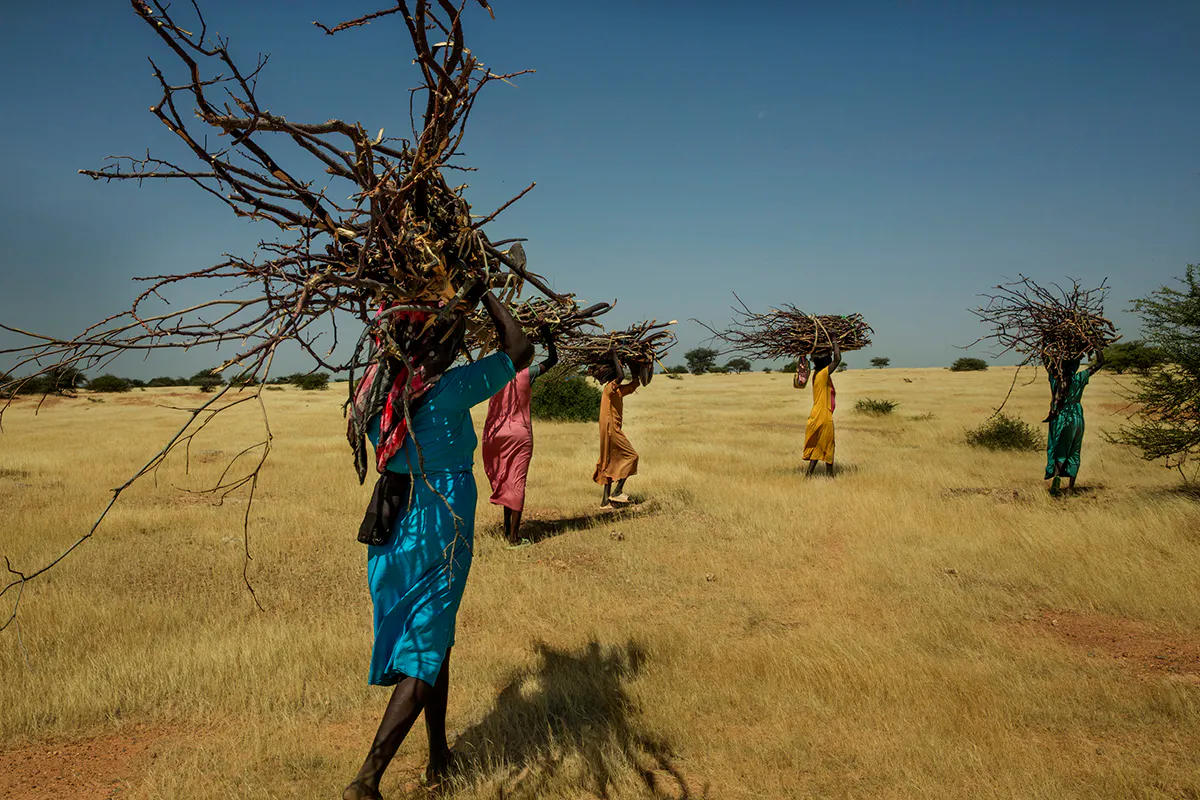
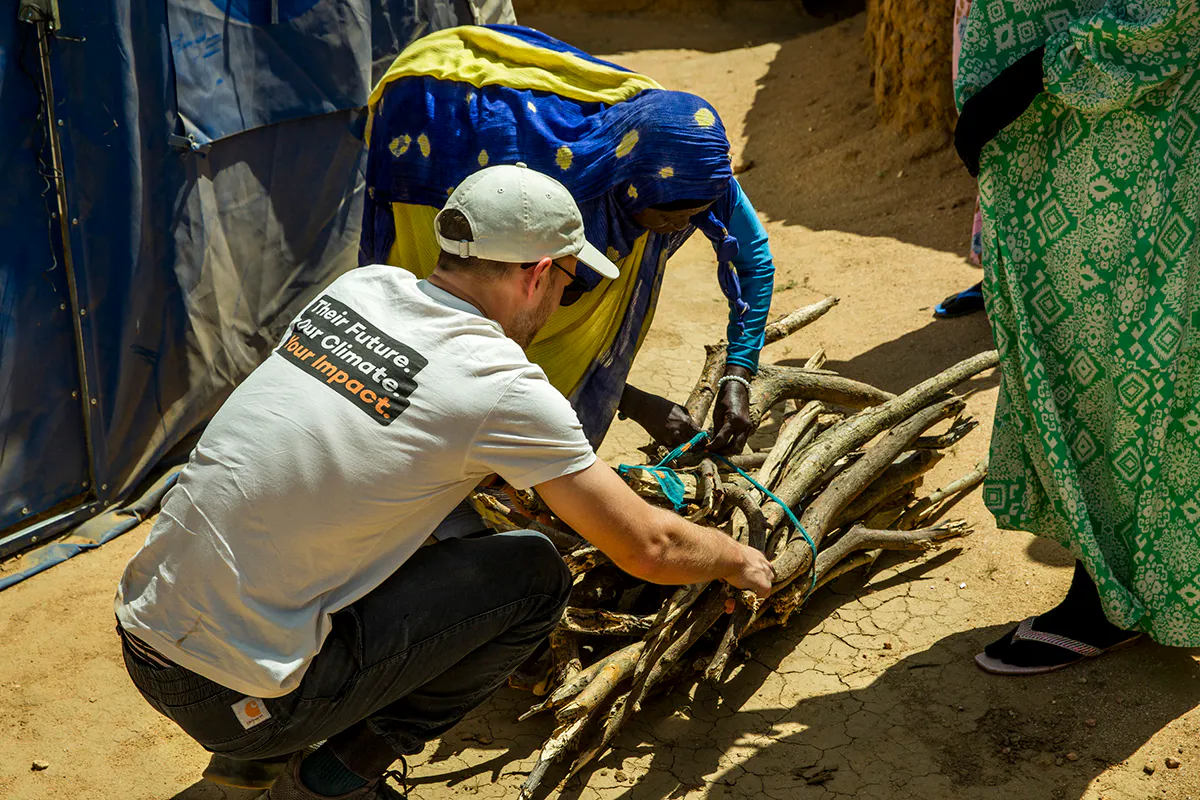
In the dry, hot Sahel climate, firewood is scarce and increasingly expensive. For many families, cooking a daily meal means leaving the relative safety of the camp to search for wood. These journeys can take hours and expose women and children to serious risks. What should be a simple, everyday activity becomes a burden and a danger.
A simple and affordable solution for a safer life
Since 2019, FairClimateFund and local partner ADES have been working together to change this reality.
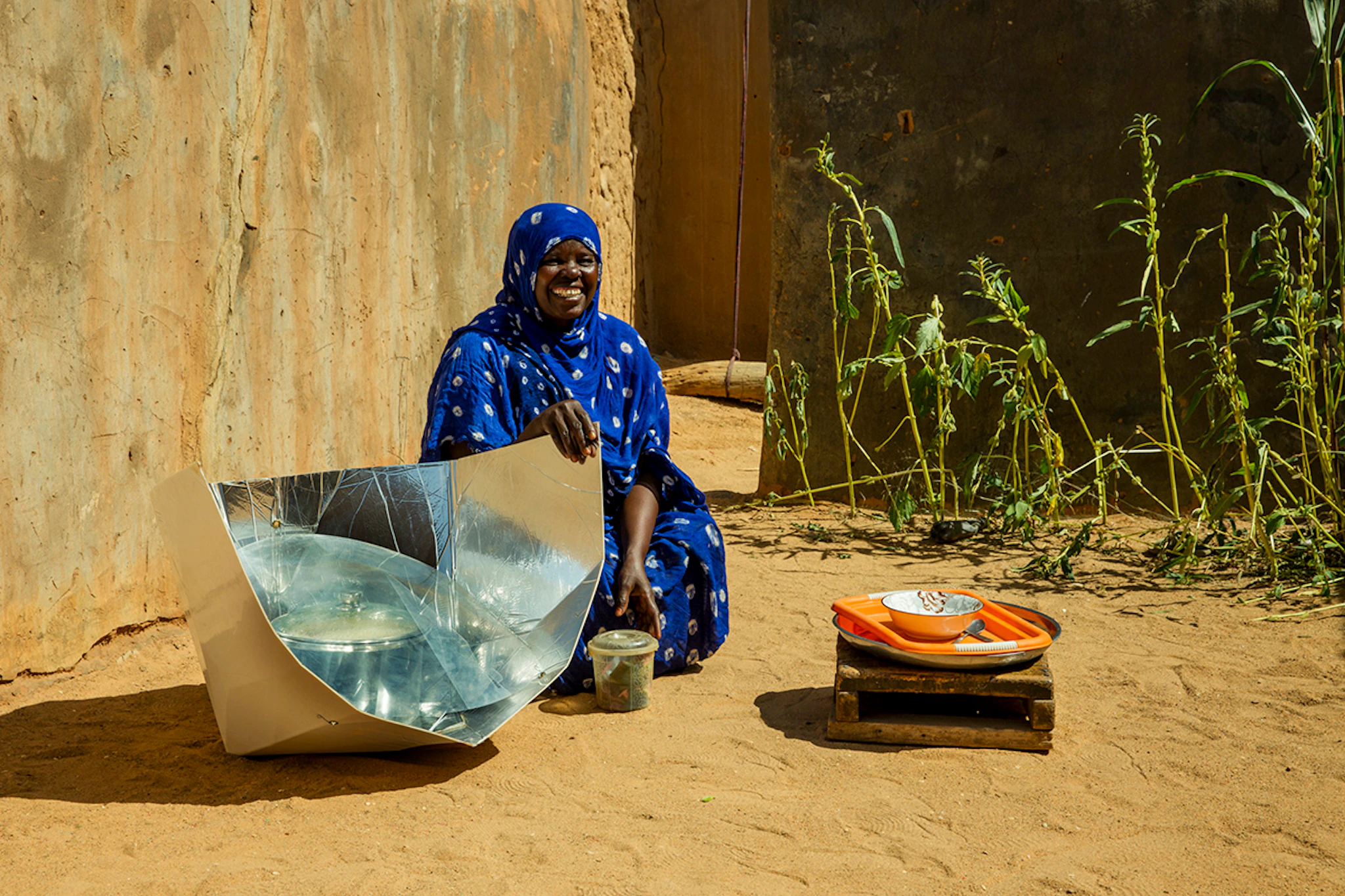
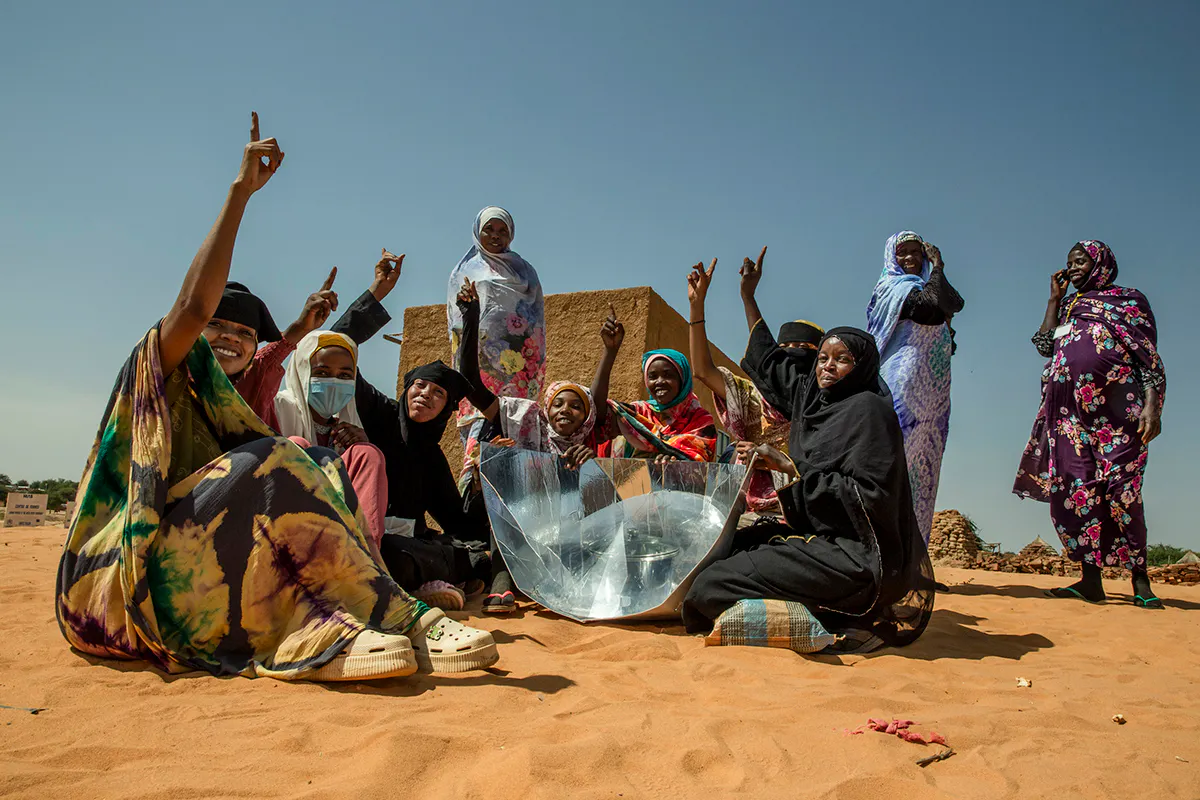
The solution is simple. Solar cookers harness the abundant sunlight of the Sahel. Instead of relying on firewood, families can cook safely and cleanly using the power of the sun. Women no longer need to leave the camp to collect fuel. They reclaim valuable time while reducing their exposure to risk.
The health benefits are equally important. Cooking over open fires exposes families to harmful smoke that can cause serious respiratory problems. By switching to solar cooking, indoor air pollution is eliminated entirely. Kitchens become safer spaces. Children breathe cleaner air. Women no longer spend hours each day inhaling smoke.
The technology is straightforward, but its impact on daily life is significant.
Social and environmental impact
The impact of the project reaches far beyond individual households.
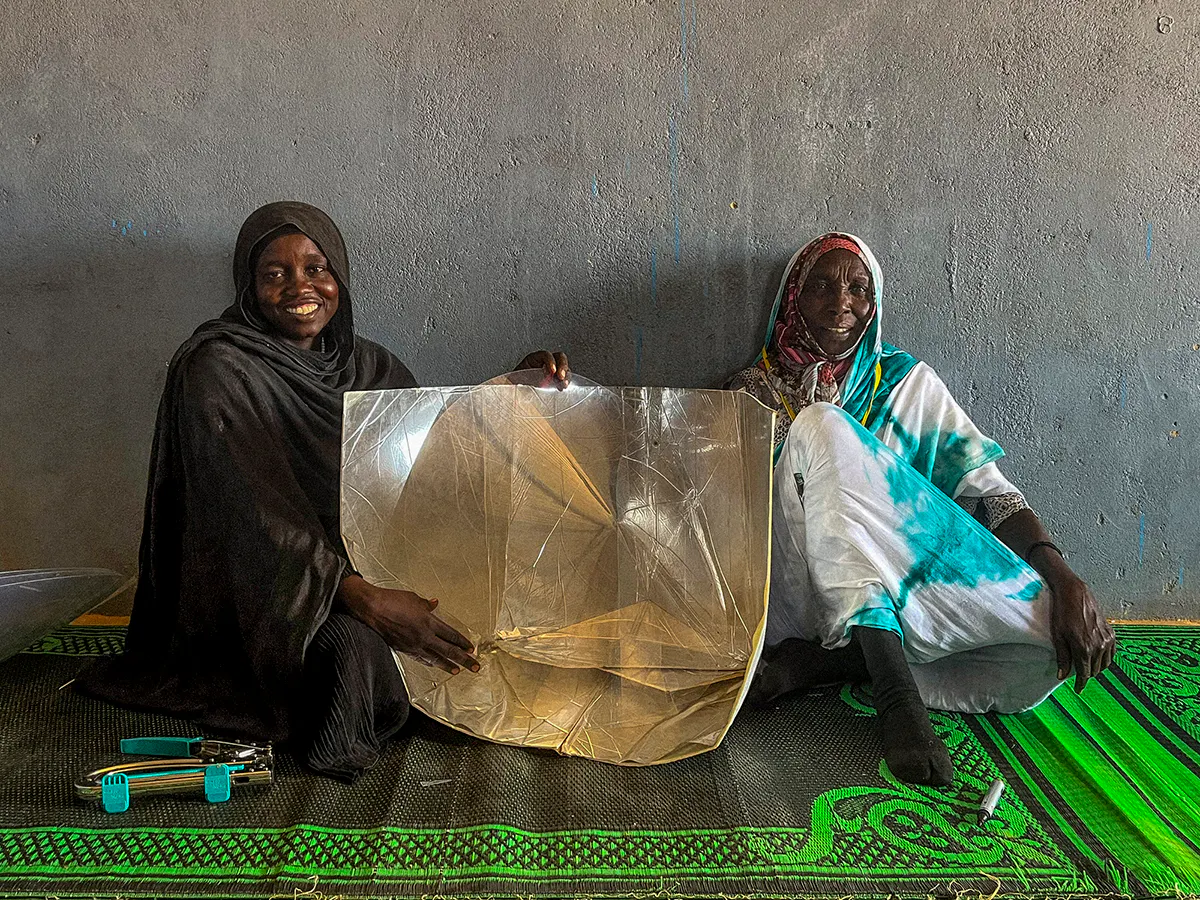
Solar cookers are locally assembled in workshops inside the refugee camps and are fully managed by women. These workshops create jobs and income while strengthening skills, confidence and ownership within the community. Women are both the beneficiaries of the project and the leaders of it.
The solar cookers are locally assembled in workshops inside the camps, fully managed by women. This not only creates jobs and income, but also strengthens skills, confidence, and ownership within the community.
The project also contributes to key Sustainable Development Goals:
- SDG 3 – Good Health and Well-being
Thousands of households benefit from improved air quality. - SDG 5 – Gender Equality
Women gain time, safety, and new opportunities to shape their futures. . - SDG 13 – Climate Action
More than 94,000 tonnes of CO₂-equivalent emissions reduced. - SDG 15 – Life on Land
Nearly 47,000 tonnes of wood saved, protecting tens of thousands of trees.
We see first-hand the environmental and energy-related challenges in the camps. Desertification, climate change and limited regulatory capacity make it increasingly difficult to protect natural resources such as trees. Firewood collection sometimes requires travelling distances of up to 80 kilometres.
As our partner, local NGO Agence de Développement Économique et Social (ADES), explains:
“We see significant environmental and energy-related challenges in the camps. Desertification, climate change, and a lack of effective regulations make it difficult to protect natural resources such as trees. In addition, collecting firewood is increasingly challenging due to the vast distances involved — sometimes up to 80 kilometres. Solutions such as solar cookers from the FairClimateFund project provide refugees with access to sustainable energy and help foster more peaceful coexistence with host communities”.
Quote from local NGO Agence de Développement Économique et Social (ADES)
About FairClimateFund
Since 2009, FairClimateFund has been committed to advancing fair climate action. We believe the carbon market can and should benefit those most vulnerable to the impacts of climate change. Those with the largest carbon footprints invest in CO₂ reduction projects that deliver strong, measurable social impact.
Our project in Chad goes beyond reducing emissions. It addresses safety, health, gender inequality and environmental degradation at the same time. It demonstrates that climate finance, when applied responsibly, can respond to urgent humanitarian needs while contributing to long-term sustainable development.
We are extremely proud of what this project has achieved so far. At the same time, we are aware that many more women still need to be reached. As refugees continue to arrive, the need for solar cookers continues to grow.